
Firstly, what is an aorta?
An aorta is the largest and the main artery that carries
oxygen-rich blood from the heart to the
rest of the body.
What is an Aortic Aneurysm?
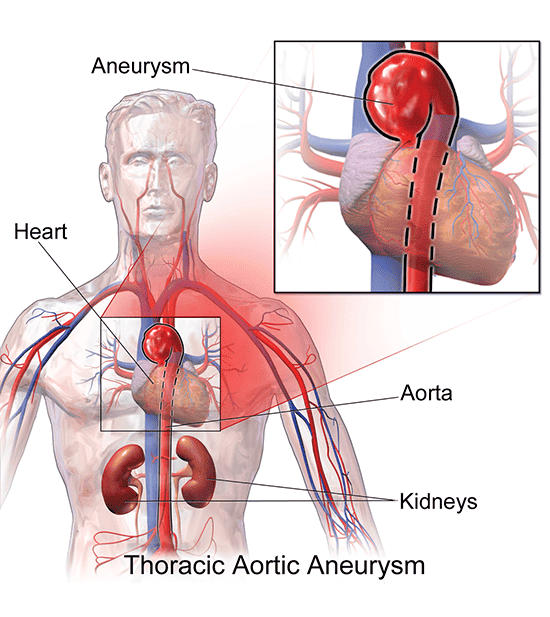
Normally the walls of the arteries are thick and muscular, allowing them to withstand a large amount of pressure. Occasionally, a weak area may develop in the wall of the artery. This makes the pressure within the artery to push outwards, creating a bulge or ballooned area called aneurysm. Aortic aneurysm is a bulge in a section of aorta; which makes it overstretched and weak. If untreated it can burst and cause serious complications too.
Where is aneurysm formed?
It can form in any section of the aorta, but they are most common in belly area; this is called abdominal aortic aneurysm. It can also happen in the upper body; this is called thoracic aortic aneurysm.
What Causes Aortic Aneurysm?
What are the symptoms?
The symptoms for abdominal aortic aneurysm and thoracic aortic aneurysm may begin to occur when the aneurysm gets bigger and puts pressure on surrounding organs.
Why should Aneurysm treated early
If an aortic aneurysm bursts, or ruptures there is sudden severe pain, an extreme drop in blood pressure, and signs of shock. In this case, immediate medical treatment is required, so you need to be rushed to the hospital.
What are the examinations & tests involved?
X-ray, Ultrasound, Echocardiogram and Screening tests (taken for other reasons). Abdominal aneurysm is at times felt during a routine physical examination too. The major tests include:
What are the usual Treatment options?
If you are diagnosed with an aortic aneurysm, you need close medical monitoring and possibly surgery or treatment accompanied by major lifestyle management. First thing after the diagnosis, your doctor will evaluate whether you need surgery, if yes, whether you will be able to withstand the surgery, or whether you can avoid surgery. Factors like the shape and flexibility of the aorta are considered in deciding how to treat an aortic aneurysm.
What should be my lifestyle?
Medicines and proper counseling will help you.
To control high blood pressure, eat a low sodium diet, and get regular exercise.
This lowers the risk of complications though it is not likely change the course of an aortic aneurysm.
Get advice from your doctor. Do exercise that raises your heart rate; do that at least 30 mts a day; everyday.
Limit alcohol to the minimum as far as possible.